The discovery document: why I write before I build
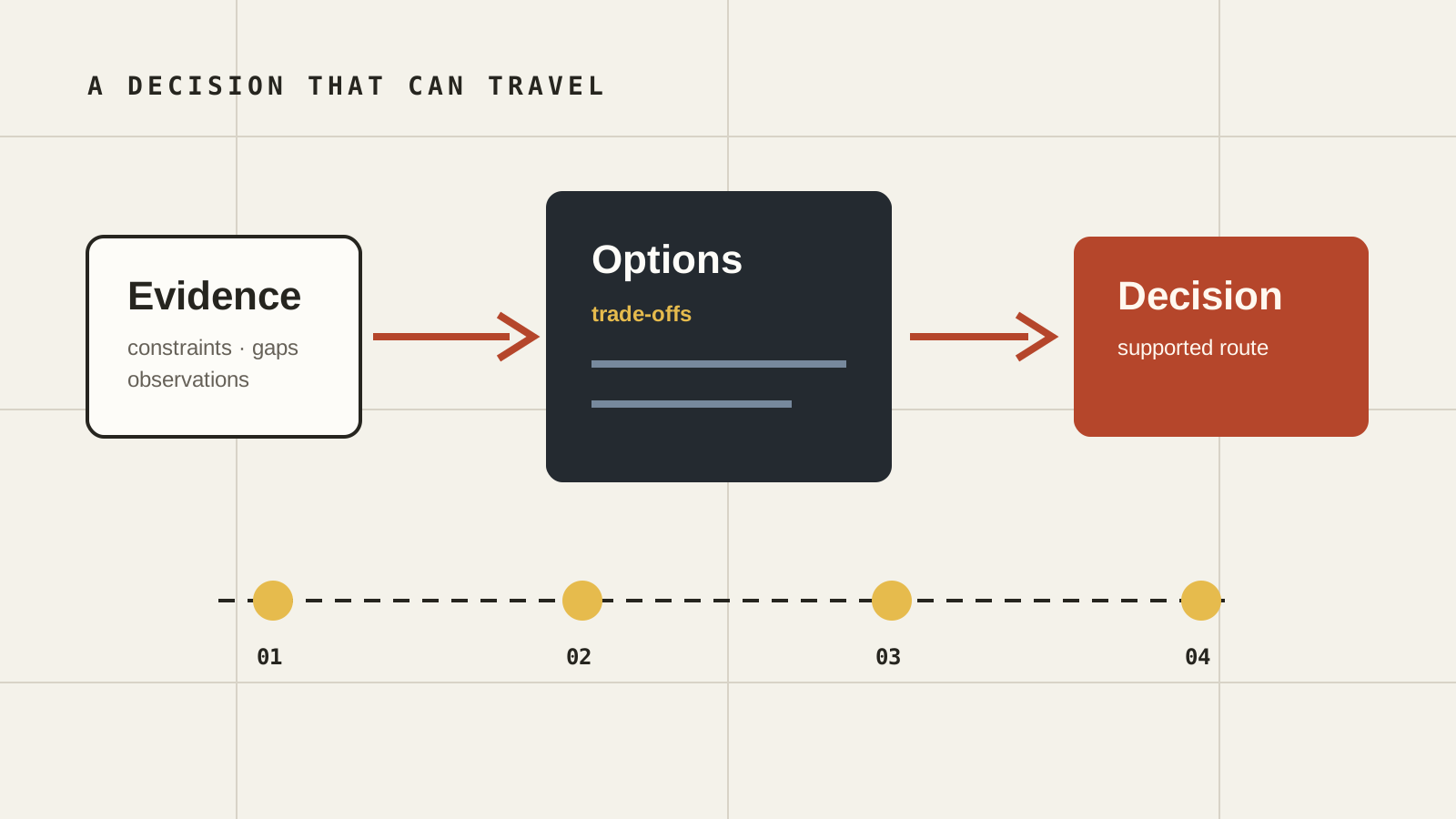
A useful technical-direction document turns uncertainty into a decision: evidence, realistic options, explicit trade-offs and a staged path another team can act on.

A decision, not a document
Writing before building is not a ceremony and it is not a rule that every project must pass through. It is useful when the cost of choosing the wrong direction is materially higher than the cost of investigating first. A platform change, migration, integration, supplier proposal or persistent delivery constraint can all reach that point.
A technical-direction document earns its place by making the next decision safer and more usable.
The output may be a document, but the product is a decision that the owner can make and explain. If the work ends with pages of observations and no supported route forward, it has not done its job.
What it has to answer
The structure should be sized to the decision. A focused question may need a concise artifact; a cross-system change may need several views. Page count is a poor proxy for usefulness. The durable questions are more important:
- What are we deciding? Name one primary decision or diagnostic question and the supporting questions that genuinely affect it.
- What evidence do we have? Separate observed constraints from assumptions, preferences and missing information.
- Which options are realistic? Include the credible alternatives, not a decorative list built to make one answer look inevitable.
- What are the trade-offs? Show delivery, operational, security, cost and ownership consequences where they matter.
- What do I recommend? State the direction, the reasoning, material risks and what would cause the decision to change.
- How does action begin? Leave a staged implementation and validation path, including unresolved dependencies and the next decision gate.
The artifact has to travel
A decision that works only while its author is in the room is a dependency, not a hand-off. The client should be able to give the result to an internal team, another supplier or a future reviewer and still recover the reasoning behind it.
Portability is part of the acceptance standard: the route must remain usable if I am not retained for implementation.
That means the recommendation cannot be a polished conclusion floating above invisible analysis. The evidence, rejected options, assumptions and boundaries belong beside it. Good technical writing makes disagreement cheaper because people can challenge the same facts and trade-offs instead of reconstructing them from memory.
Direction is not a toll gate
Not every implementation needs a separate discovery engagement. When the outcome, boundaries and acceptance criteria are already clear enough to estimate responsibly, project-based delivery can begin directly. Forcing a consulting phase in front of understood work adds delay without reducing uncertainty.
The reverse is also true. A build quote created while the actual constraint is still unknown is not certainty; it is a number attached to assumptions. Technical direction is the right route when investigation can materially change what should be built, who should own it or whether building is the answer at all.
A practical sequence
The work stays bounded by moving through explicit decisions rather than an open-ended research phase.
- 1Frame the questionAgree the decision owner, the primary question, the evidence boundary and what acceptance means.
- 2Inspect the evidenceReview the agreed system, documents, proposals and stakeholder input; record gaps instead of filling them with confident guesses.
- 3Compare realistic routesMake constraints and trade-offs visible across the options that could actually be chosen.
- 4Recommend and stageState the supported direction, material risks, dependencies and a sequence for implementation and validation.
- 5Read out and hand overResolve one consolidated round of feedback and leave the owner with an artifact they can use without continuing access to the author.
How I know it is finished
The final artifact should answer the agreed question, show enough evidence and reasoning to make the recommendation credible, record the material uncertainty that remains, and give the delivery team a practical place to start. It should not quietly expand into production coding, continuing governance or an unlimited promise to answer every adjacent question.
That boundary protects both sides. The client receives a standalone outcome it owns. If implementation is the responsible next step, it can be scoped from what the decision established rather than from a guess made before the work began.
The document is finished when the decision can travel without its author.